To Hold As Letting
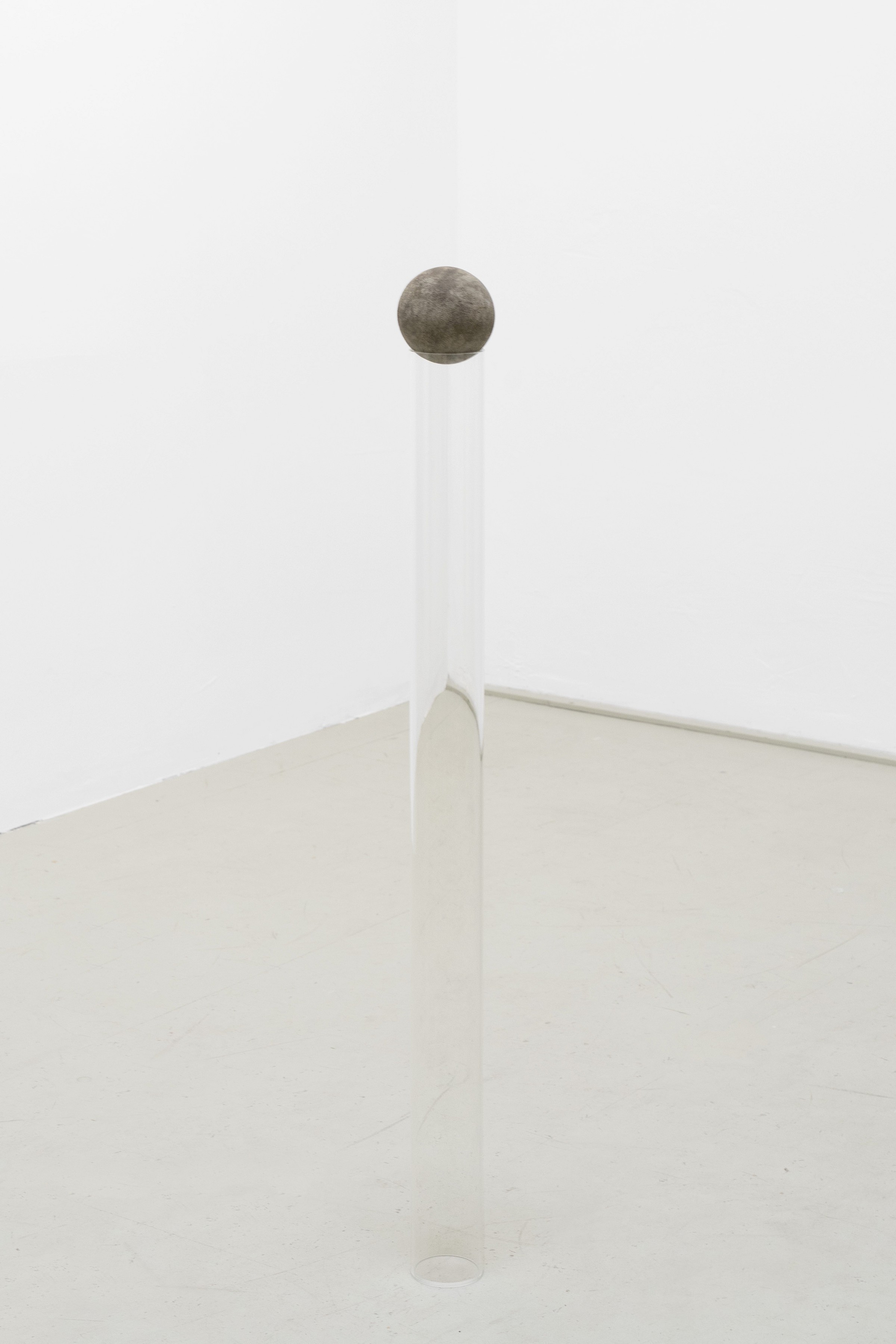
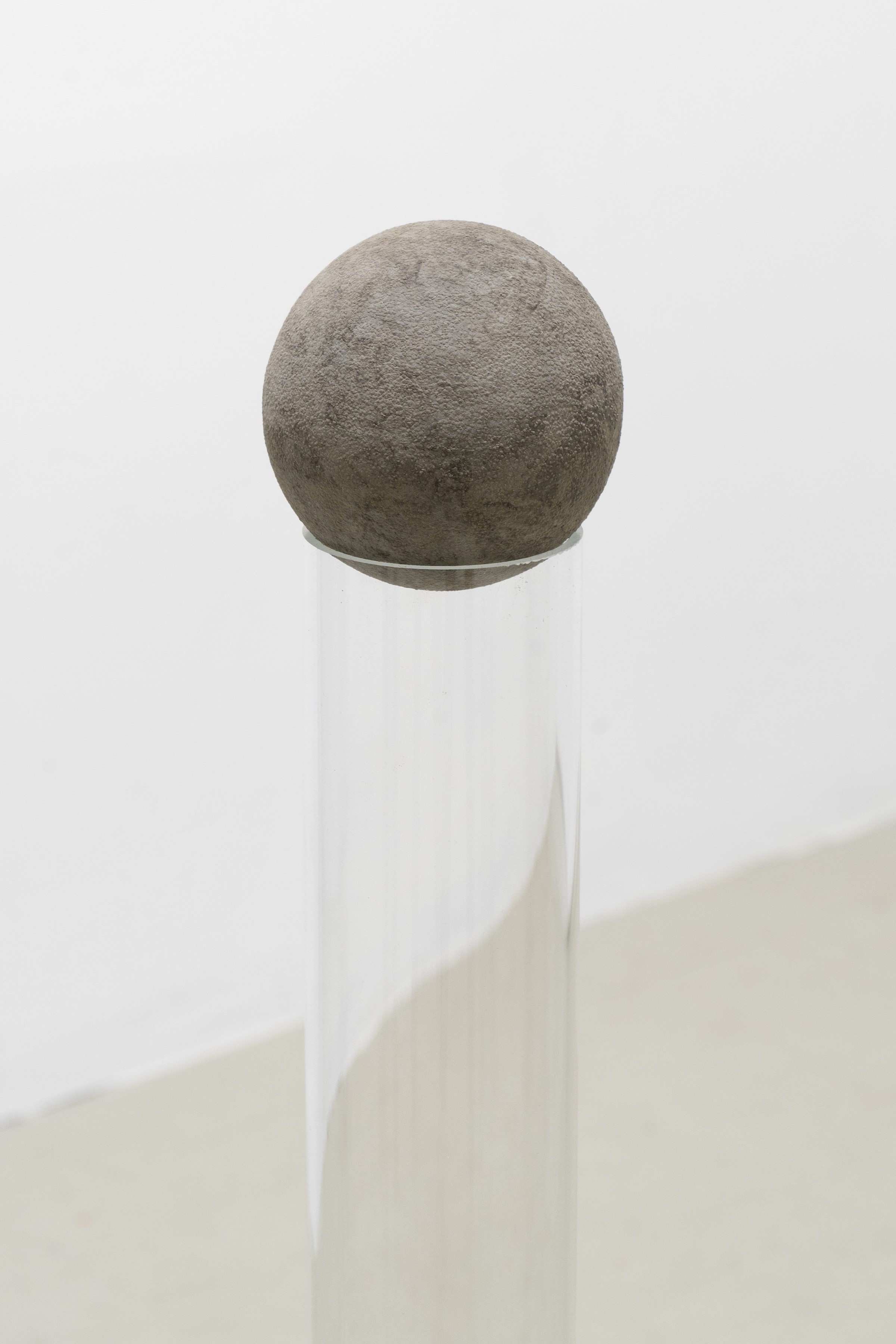
To Hold As Letting consists of two sculptures made from deep-sea sediments collected at depths between 3,000 and 5,500 meters using coring devices.
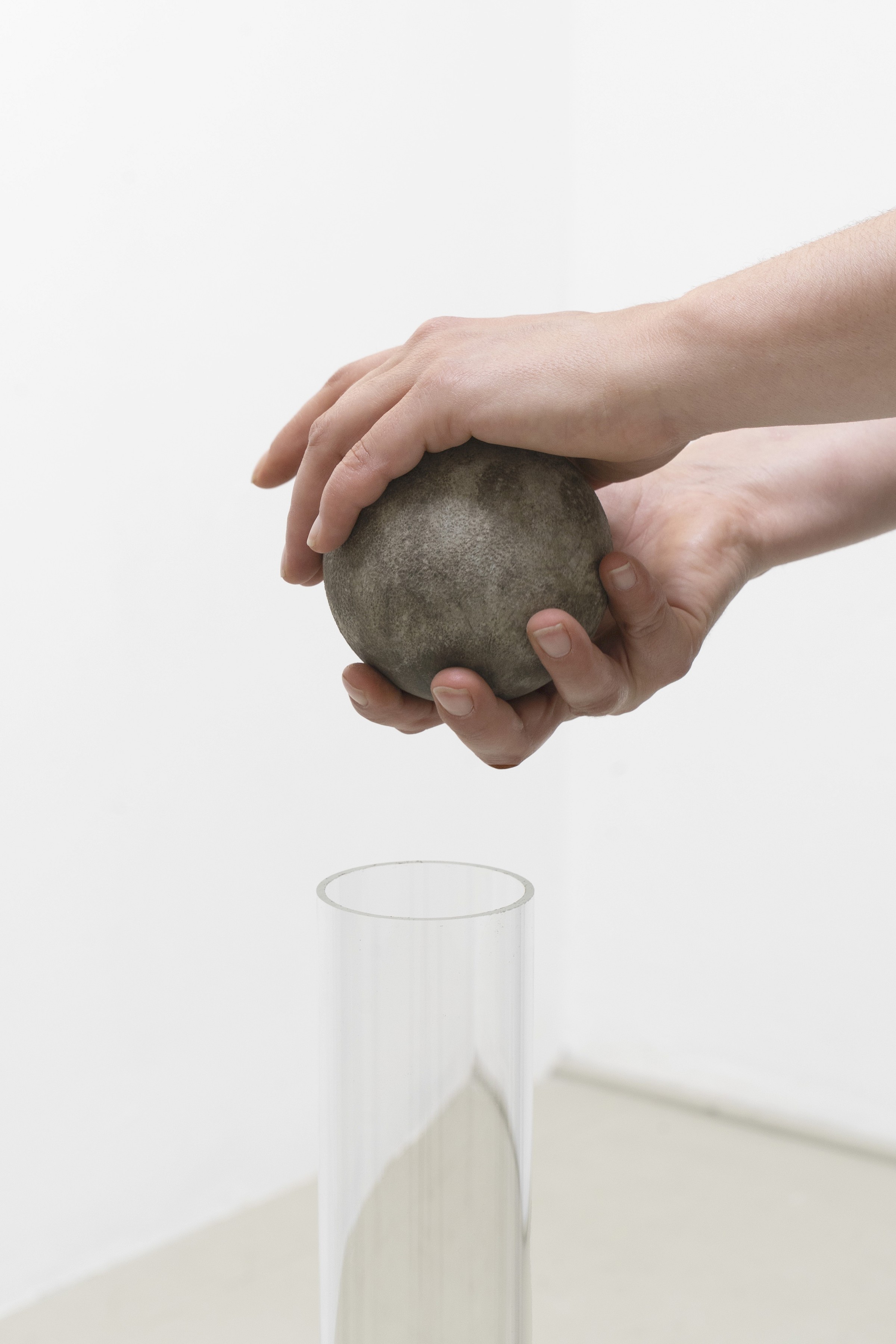
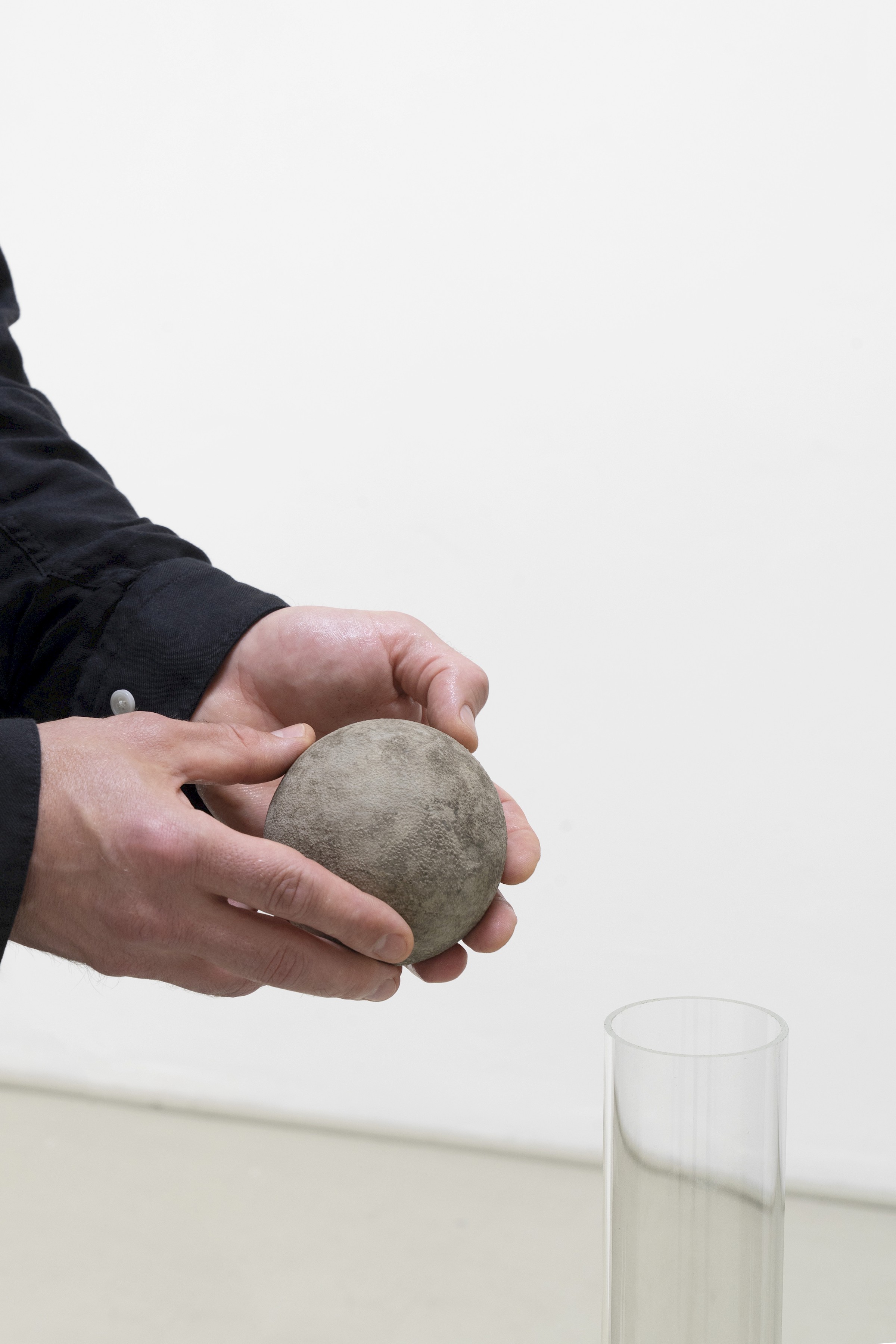
To Hold is a compact sphere that can be held between the hands. It was made following the Japanese technique of Dorodango, a traditional school pastime in which children shape mud into perfectly polished spheres using only their hands, water, and time. This practice is here reactivated as a gesture of care and transformation, creating a connection to the environment through the act of shaping. The weight of the sphere, both physical and symbolic, is intended to activate bodily awareness of the distant origin of this material: while holding it, its mineral burden subtly transfers to the visitor’s body and leaves particles on the skin that are invisible to the human eye.
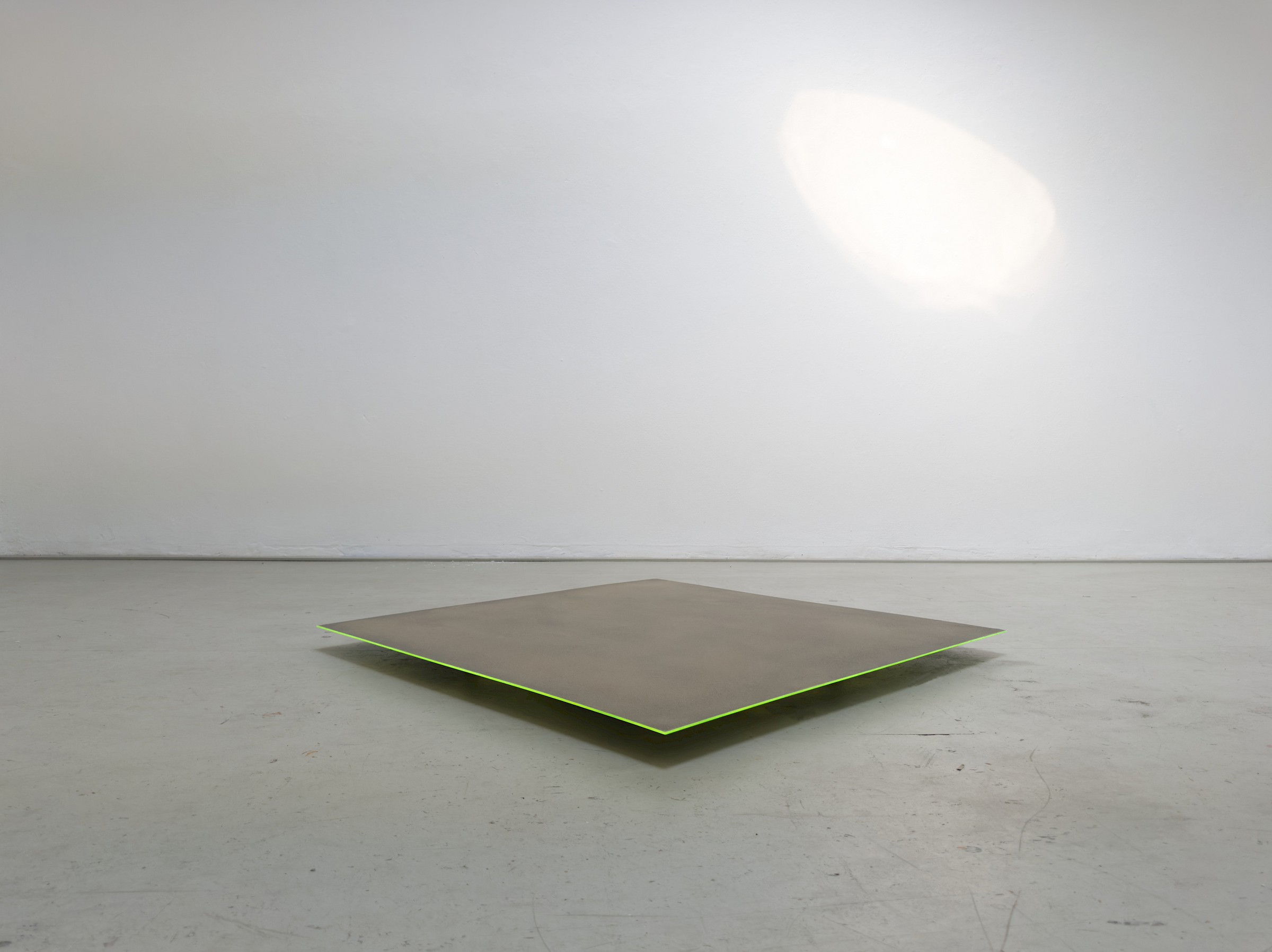
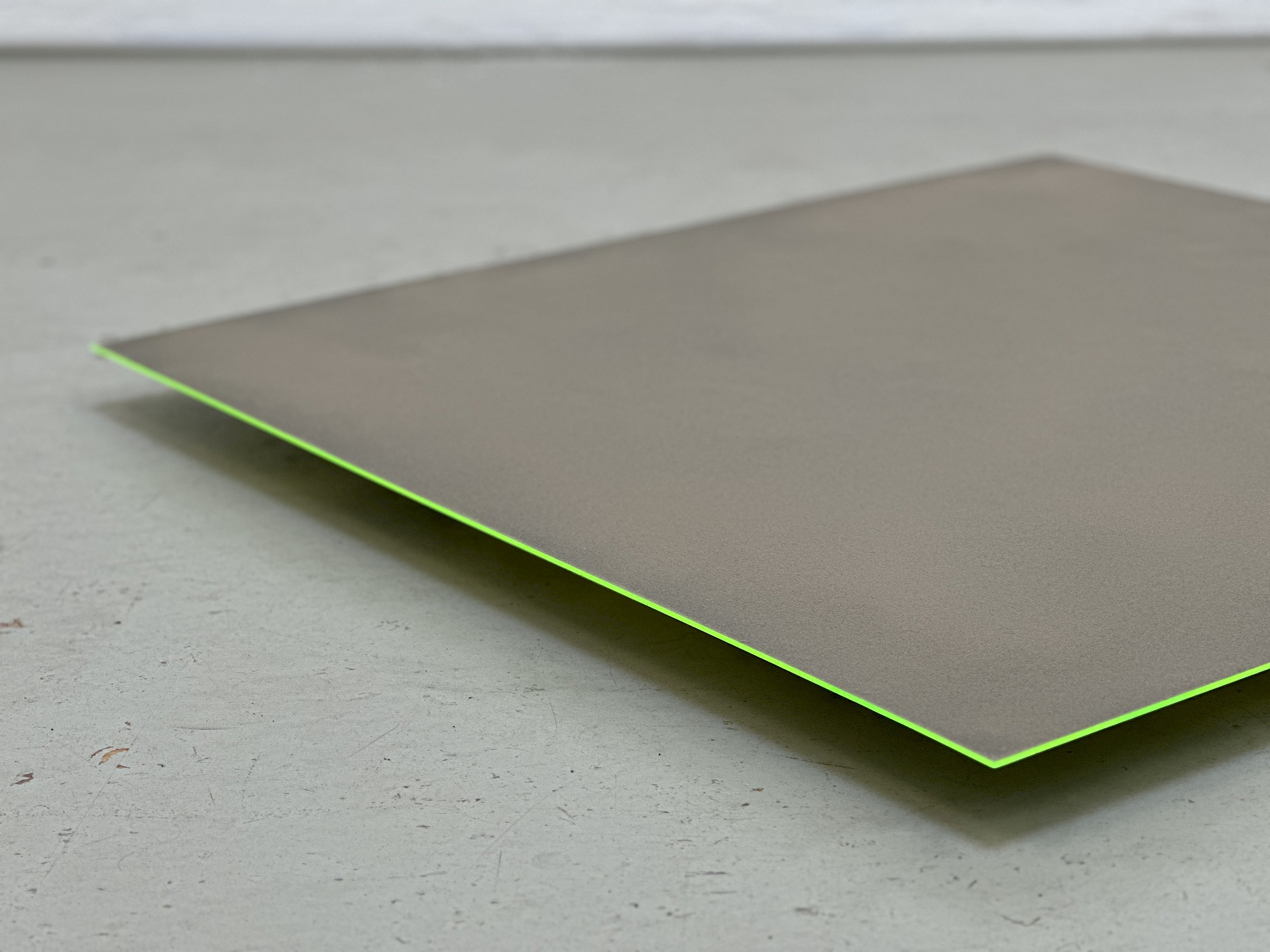
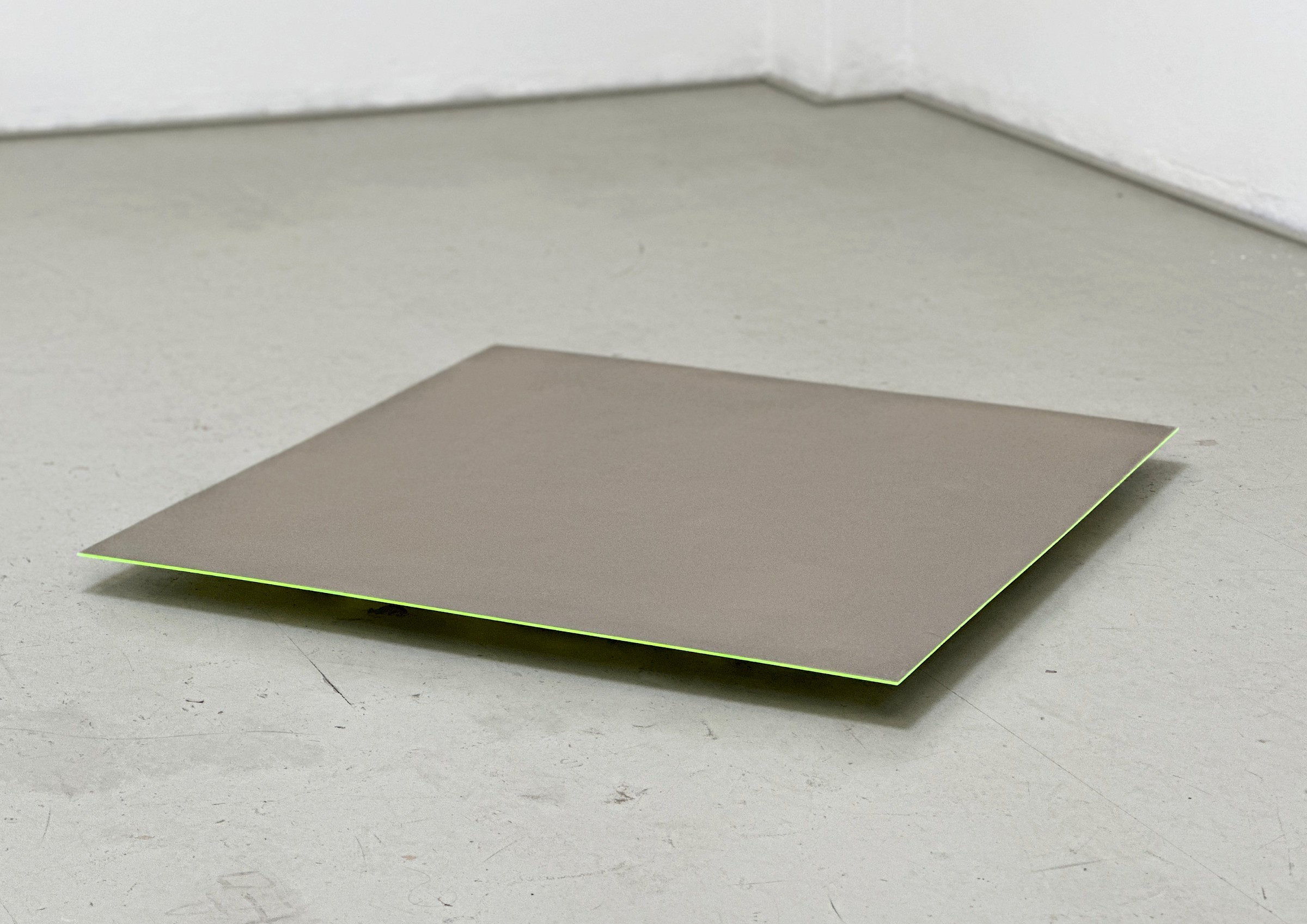
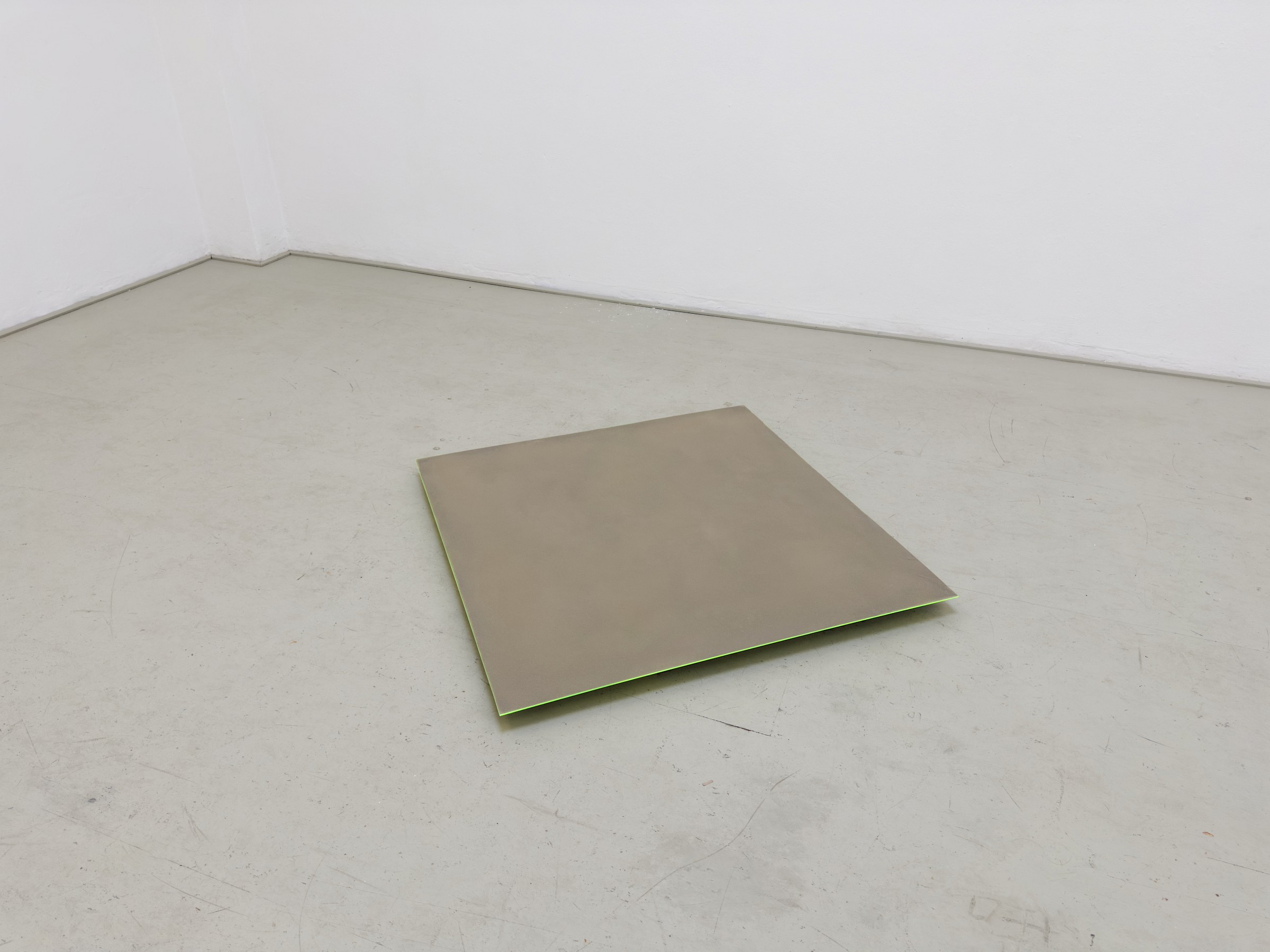
As Letting consists of a 100 × 100 cm plate — the dimensions corresponding to the quadrants used in ecology for sampling organisms — covered with a thin layer of seabed sediment. This structure can move through space as it is mounted on wheels and refers to the movement of dust in the atmosphere before settling on the seabed. Unlike the sphere, this surface is open to the constant deposition of new particles: environmental dust or traces of human movement. Thus, the environment — including the visitor — contributes to changing and reshaping the depicted landscape.
The seabed acts as a meeting point for particles from various origins: fluvial, desert, industrial, or cosmic. Their accumulation forms invisible landscapes that carry life cycles in slow and fragile timescales. In this installation, the contrast between the floating and light (the movable plate) and the dense and compact (the sphere) suggests two ways of relating to this distant matter: one inviting carrying, holding, feeling the weight; the other allowing itself to be influenced, changed, and recomposed by the passage of time.
Sediment and acrylic glass, 2025